The short verdict: SE Ranking is the better rank tracker per dollar by a wide margin, 2,000 daily-tracked keywords at its entry price against Semrush's 500 at a higher one. Semrush wins when tracking is one module inside a bigger research platform you will actually use.
Here is the tracking-first comparison, with pricing verified from both vendors' pages this July.
| SE Ranking | Semrush | |
|---|---|---|
| Entry plan (annual billing) | $103.20/mo Core | $117.33/mo SEO |
| Entry plan (monthly billing) | $129/mo | $139/mo |
| Tracked keywords at entry | 2,000, checked daily | 500, checked daily |
| Next tier | $223.20/mo Growth, 5,000 kw | $165.17/mo Starter, still 500 kw |
| 5,000-keyword tracking costs | $223.20 (Growth) | $455.67 (Advanced) |
| Projects at entry | 10 | 5 |
| AI visibility | Add-on (+$71.20 annual) | Included from Starter tier |
| White label / agency | Agency Pack +$69/mo | Higher-tier features |
| Free option | 14-day full trial | Free account, ~10 reports/day |
The per-keyword math
Rank tracking pricing reduces to one number: what a tracked keyword costs you per month.
Scale sharpens it: reaching 5,000 tracked keywords costs $223.20 on SE Ranking's Growth and $455.67 on Semrush's Advanced. Agencies tracking many client sites feel this difference as headcount.
What SE Ranking gives a tracker-first buyer
SE Ranking treats the rank tracker as the product's spine: daily checks by location and device, SERP feature tracking, and 10 projects at entry so client and side-project sites do not fight over slots.
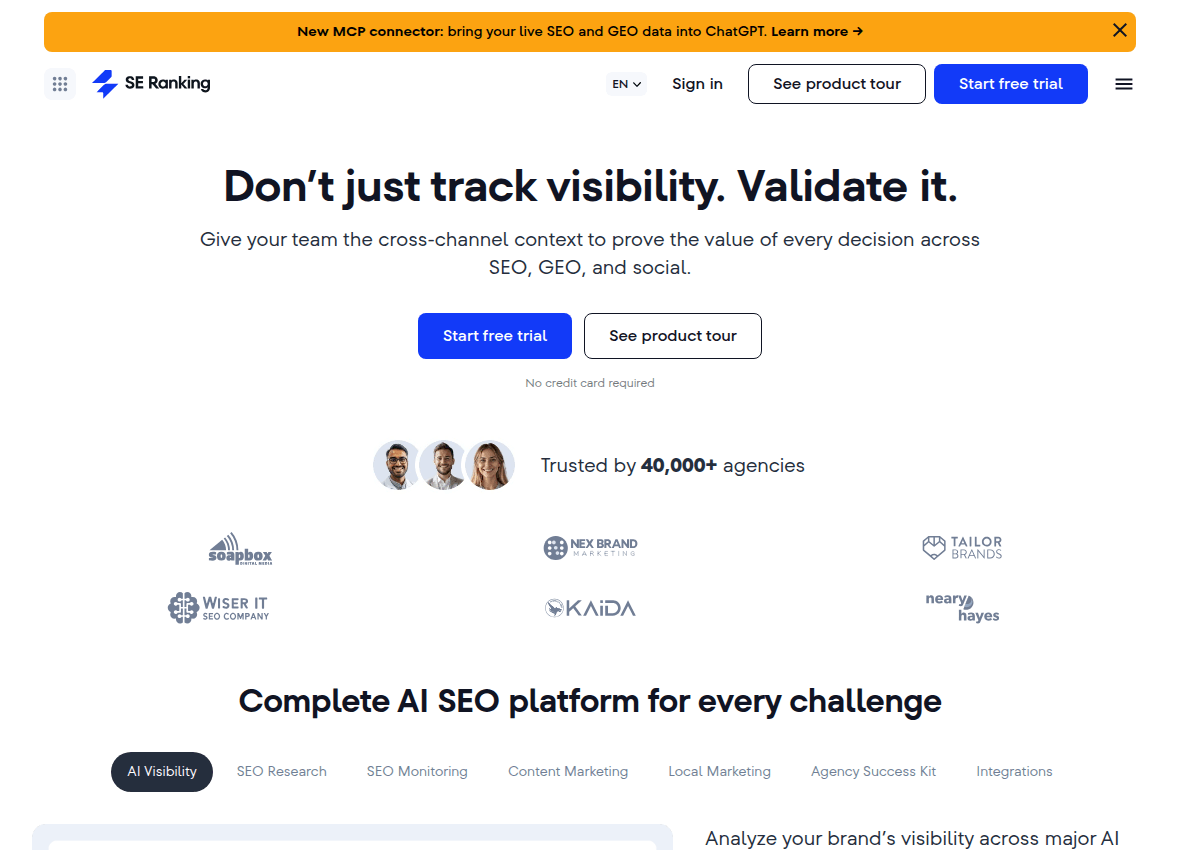
Around the spine sits a real suite: 250,000 audit pages a month at entry, competitor views, and the white-label Agency Pack at $69 a month that makes client reporting look like your own product.
The honest gaps: its keyword and backlink databases are smaller than Semrush's, so research inside SE Ranking feels thinner even while tracking feels richer.
What Semrush gives a platform buyer
Semrush sells one integrated surface where the tracker sits next to one of the industry's deepest keyword databases, competitor intelligence and content tooling.
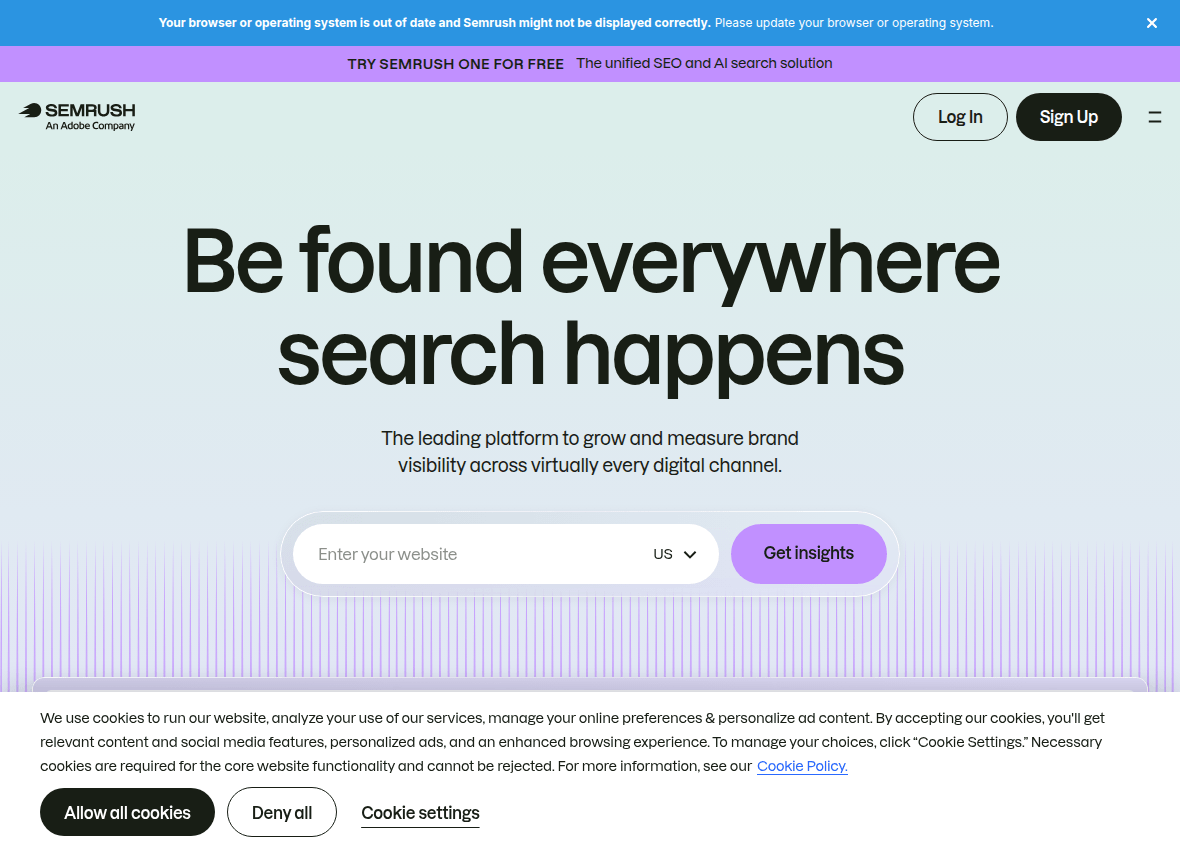
If your week alternates between "where do we rank" and "what should we target next", that integration is worth real money: position data flows straight into keyword and content decisions without exports.
The 500-keyword entry allocation is the pinch. Semrush expects position tracking to be a sampling of priorities, not a census, and buyers who want the census pay two tiers up.
Choose SE Ranking if...
- Tracked-keyword volume is the point: 2,000 at entry versus 500 decides it alone.
- You run client work: projects, audits and white-label reporting are priced for agencies.
- You research elsewhere and want the tracker to be excellent rather than incidental.
Choose Semrush if...
- You want research and tracking in one login, with the deeper database behind both.
- A sampled 500 keywords covers your priorities, because your site is one, not twenty.
- AI visibility tracking bundled from the Starter tier appeals more than an add-on.
The tracking questions that outrank the tool choice
Whichever you pick, the discipline transfers: track the keywords that map to money pages, split brand from non-brand, and read trends rather than daily wobbles, the same fundamentals as the Search Console setup.
And keep the derived reports in view: quick wins, decay and cannibalization are where tracking becomes edits, on any platform.
How we compared them
Pricing and limits were pulled from both vendors' public pricing pages in July 2026, quoting annual billing unless noted. Neither company sponsors this site and there are no affiliate links here.
The one-line takeaway: SE Ranking for the census, Semrush for the sample plus the platform. At roughly 5 cents versus 23 cents per tracked keyword, volume trackers know their answer; platform buyers were never really comparing trackers.