The short verdict: Moz is the affordable, approachable choice whose Domain Authority remains the industry's shared shorthand, while Semrush is the deeper, pricier platform whose tracking and competitive data go further in every direction.
Which one fits depends on whether you are buying a scoreboard or a war room. Pricing below was verified from both vendors' pages this July.
| Moz | Semrush | |
|---|---|---|
| Authority metric | Domain Authority (DA) | Authority Score (AS) |
| Entry price | $49/mo Starter, single site | $139/mo SEO ($117.33 annual) |
| Standard tier | $99/mo ($79 annual), 3 sites | Same SEO plan, 5 projects |
| Tracked keywords | 300/mo (Standard), 1,500 (Medium) | 500 daily (SEO), 1,500 (Pro+) |
| Mid tier | $179/mo Medium ($143 annual) | $299/mo Pro+ ($248.17 annual) |
| AI visibility | Tracked prompts in plans | Included from Starter tier |
| Free options | Link Explorer, MozBar | Free account, ~10 reports/day |
| Personality | Friendly, focused, cheaper | Vast, integrated, pricier |
Two authority scores, one warning
Moz's Domain Authority predicts ranking competitiveness from link data and remains the score clients, journalists and link prospectors quote by reflex. Semrush's Authority Score blends link power with organic performance and traffic signals into its own 100-point read.
Both are estimates, neither is a Google input, and their scales are not exchangeable: the same site can read 38 in one and 55 in the other while nothing is wrong. Pick one metric as your yardstick, benchmark rivals inside it, and read trends rather than levels, the same discipline as every position metric.
The case for Moz
Moz wins on accessibility, in both senses. The $49 single-site Starter and $99 Standard undercut every comparable suite, and the product's learning curve stays humane for teams without an SEO specialist.
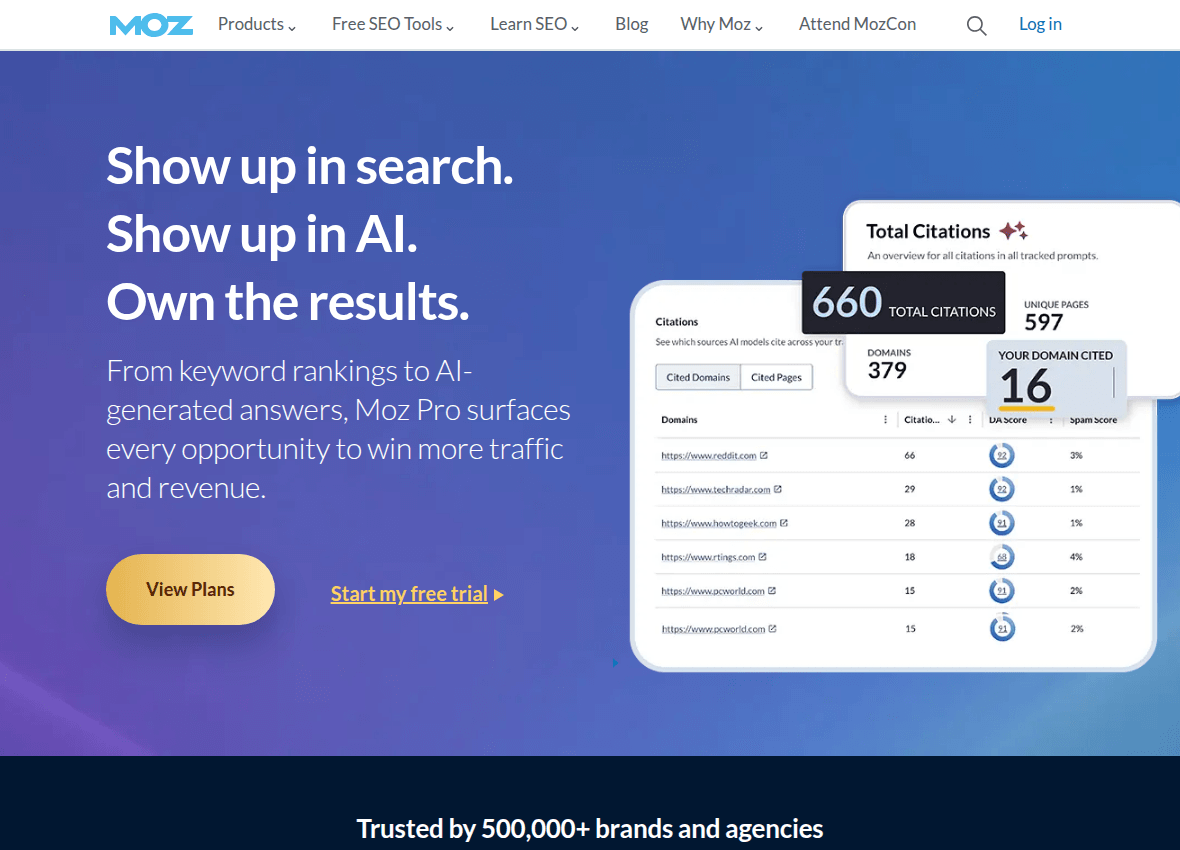
The trade is data ceiling: smaller indexes and lower allocations, with 300 monthly tracked keywords at Standard against Semrush's 500 daily. For a single site with focused priorities that allocation is fine; for sprawling portfolios it pinches fast.
DA itself is quietly load-bearing: if your reporting, PR or link outreach lives on DA numbers, using the tool that mints them keeps everyone's spreadsheet honest.
The case for Semrush
Semrush justifies its premium with breadth: daily tracking on every plan, one of the industry's largest keyword and competitive databases, ads intelligence, content tooling and audits under one login.
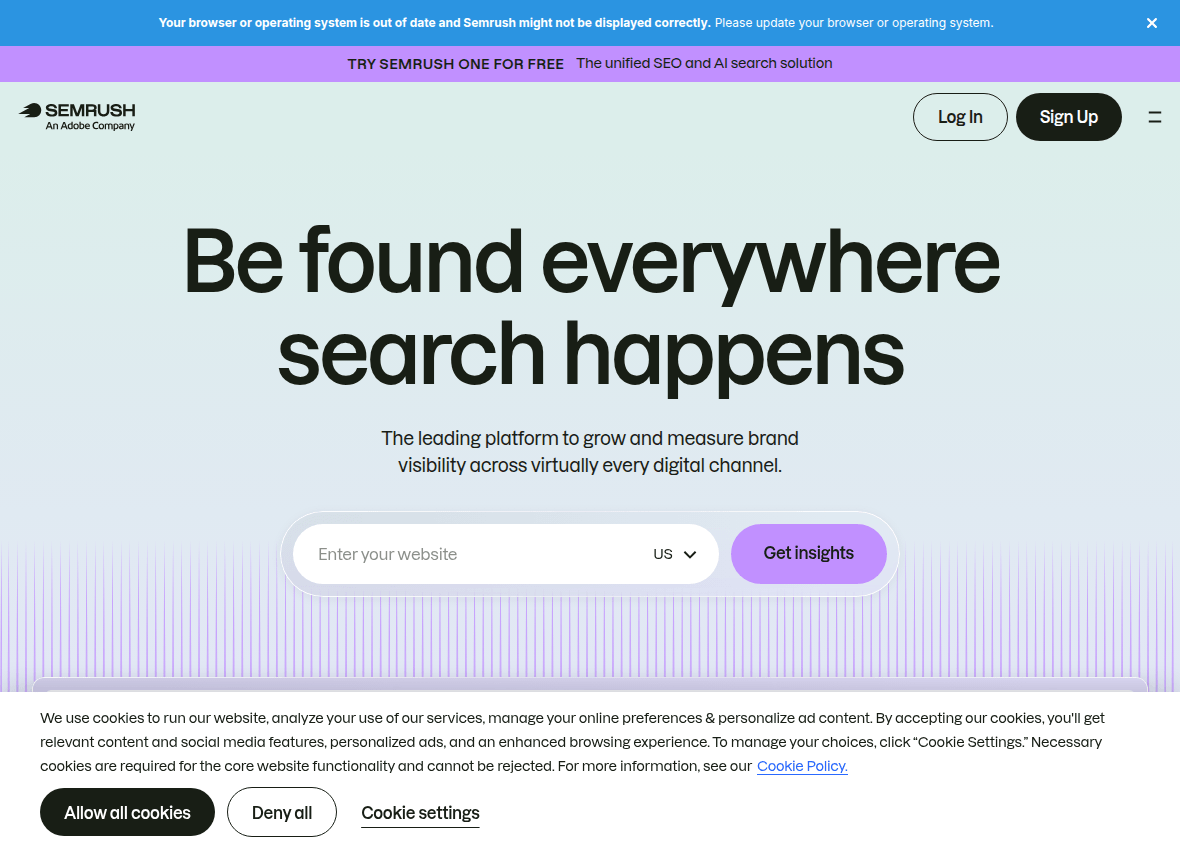
For tracking specifically, daily updates plus the derived views feed the reports that matter without exports. And the competitive side, seeing rivals' keywords, pages and ads, is where Moz simply does not compete at the same depth.
The honest caveat is utilization: Semrush's price buys a war room, and buyers who only ever open the rank tracker are overpaying for corridors they never walk. Our SE Ranking comparison covers the tracker-first alternative in that situation.
Choose Moz if...
- Budget leads: $49 to start, $99 for the real toolkit, is half of Semrush's door price.
- DA is your reporting currency with clients or leadership.
- You want a tool a non-specialist team will actually use rather than admire.
Choose Semrush if...
- Daily tracking and deeper data justify the premium for your decisions.
- Competitor intelligence, keywords, pages, ads, is a real part of your week.
- You prefer one integrated platform over stitching cheaper point tools.
How we compared them
Pricing, allocations and plan structures were pulled from both vendors' public pricing pages in July 2026, quoting annual billing where stated. Neither company sponsors this site and there are no affiliate links here.
The one-line takeaway: Moz sells an approachable scoreboard at the bracket's best price; Semrush sells the war room. Pick by what you will actually use, keep one authority metric as your yardstick, and let the tracking discipline stay the same either way.